
%20(1).avif)
.webp)
.webp)
Synchro Arts
Save hours in the studio with vocal processing software created specifically to enhance and simplify the processes of music producers and audio engineers.
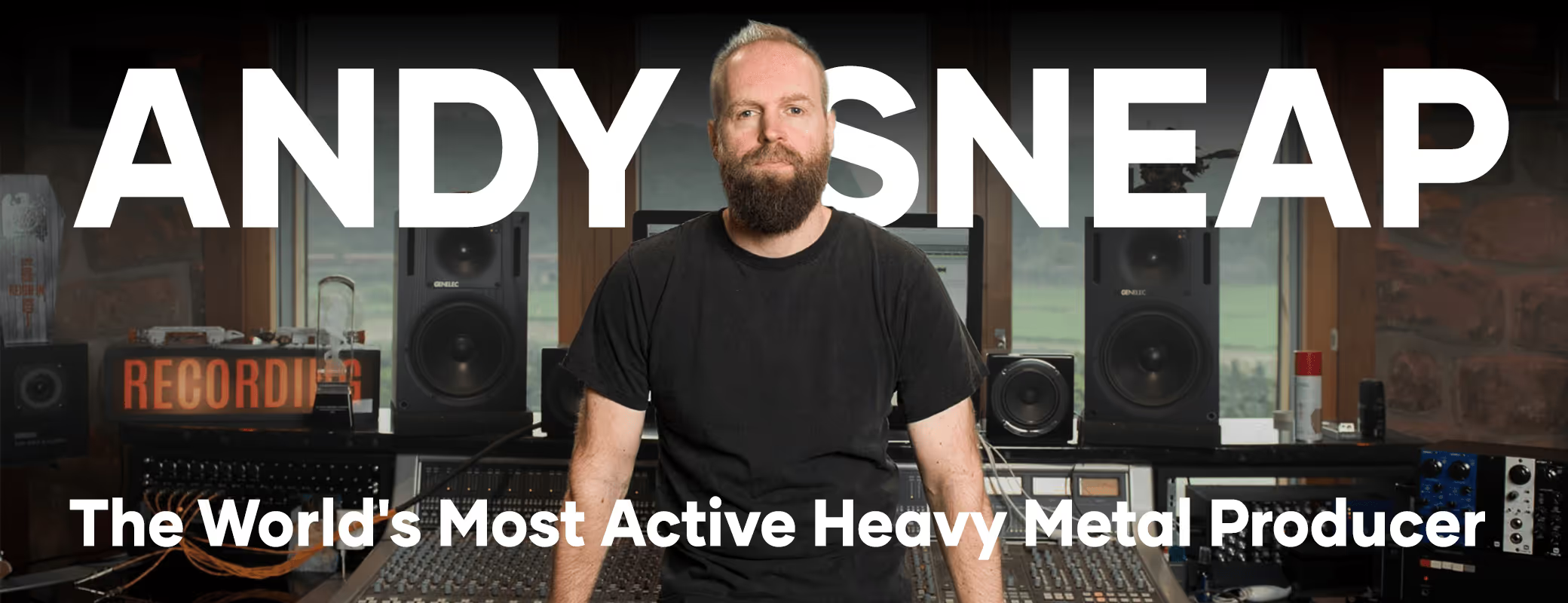
When you think of heavy metal, it’s easy to picture walls of distorted guitars, pounding double kicks, and screaming vocals.
But for legendary producer Andy Sneap, it’s the emotion behind the performance that really counts—especially when it comes to vocals.
Sneap isn’t just a producer—he’s a metal lifer. After picking up a guitar at age 12, he formed the influential thrash band Sabbat and got signed by 18.
These days, he’s clocked in over 100 albums at his Backstage Recording Studios in Derbyshire, UK, working with icons like Judas Priest, Amon Amarth, Megadeth, Dream Theater and Exodus.
“We did three albums before the band split up in 1991,” Andy recalls. “Then I got into the production side of things. I had my own little eight-track setup at the rehearsal room, which got me working at a twenty-four track studio in Nottingham in the early 90s—all on tape.”
For Sneap, the hardest part of producing metal isn't the guitars or drums—it’s the vocals.
Screamed vocals might sound raw and chaotic, but they still have pitch, timing, and emotion that need to be locked in. Andy often has to handle this work manually, since traditional tuning software can struggle with extreme vocals.
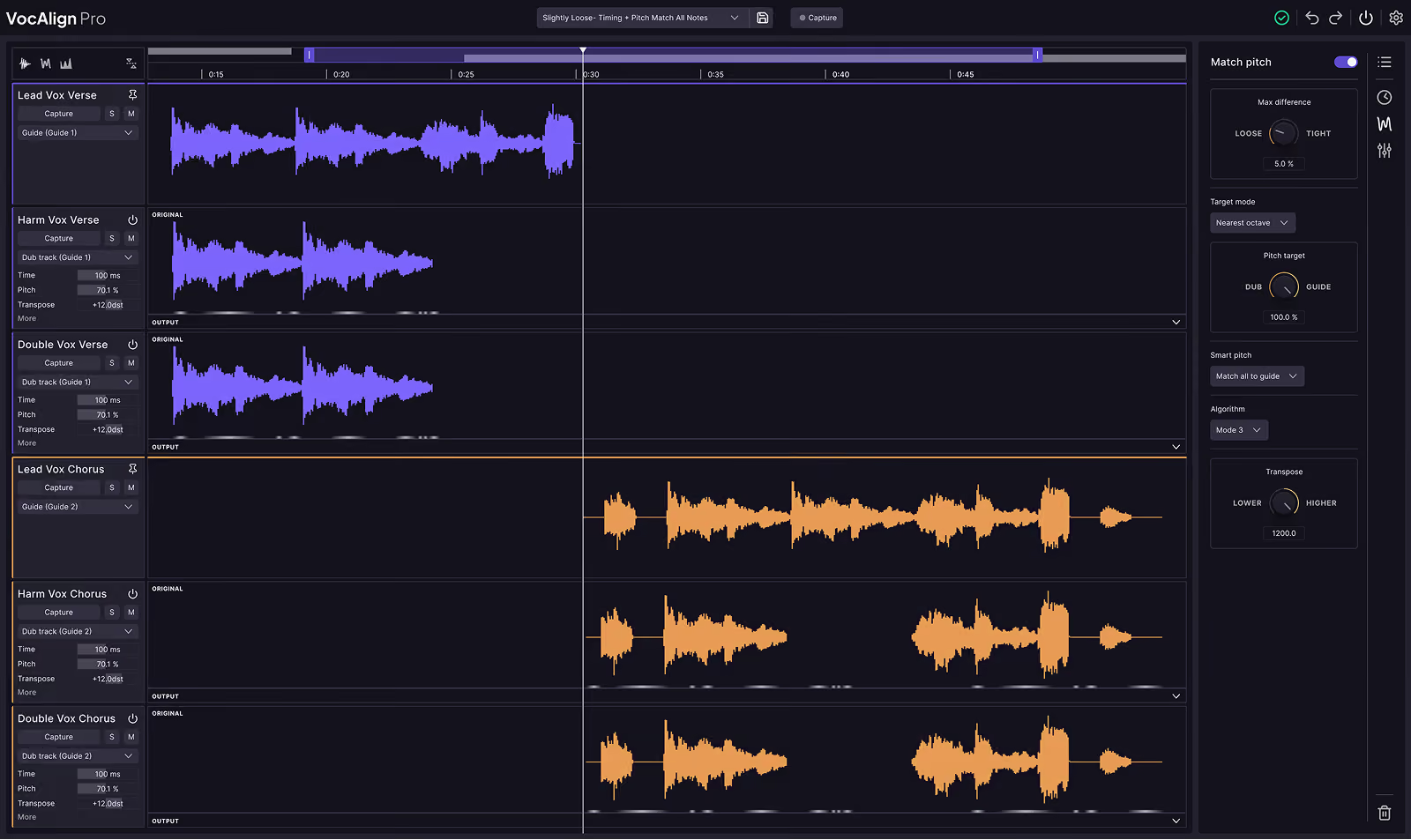
That’s where tools like VocAlign Ultra come in handy.
“It's been a lifesaver for things like vocal stacks and choirs,” he explains. “Being able to control how tight or loose the alignment is has saved me so much time—and in some cases, even saved a mix.”
To really get what a “pitched scream” sounds like, check out a performance from M. Shadows of Avenged Sevenfold—it’s not just yelling, it’s melodic.
Andy’s vocal production style is rooted in performance—but he’s all about using the right tools to get the best from a take.
“It’s the performance that will sell the song at the end of the day. You can record on an SM57, or a ten grand mic—but to me, it's all about the emotion in the voice and whether it grabs you,” he says.
“We’ve now got tricks to nudge things into place—a take that might’ve been thrown out before can now be saved and shaped into something usable. That’s game-changing.”
One of those game-changers is VocAlign Ultra. Andy’s even used it to create stereo double tracks out of a single vocal take.
“I used the milder preset to create a kind of stereo double track for a chorus,” he says. “It worked great—especially when I didn’t have an actual double.”
He’s also used it to align big backing vocal sessions, like on Amon Amarth tracks with stacks of 10 or more vocal takes.
“We’d align those to Johan’s vocal. It still worked—even with his aggressive style. And I didn’t need everything to be 100% tight. I could leave some movement, which keeps it natural. That’s what I love about it.”
Andy also uses VocAlign creatively during the songwriting process. If a singer can’t nail the timing or feel of a phrase, he’ll sing it himself (even if he admits his voice isn’t great), then align their take to his.
“A lot of singers don’t get triplets or how to end a phrase. So I sing it in time, and then align their vocal to mine. It works! And it lets me demo ideas more effectively when working with others.”
VocAlign Ultra isn’t just a time-saver—it’s a feel-saver too. Andy tends to keep things around 85% tightness to maintain a natural vibe.
“I’ve never used auto-tune. I hate it,” he admits. “I’ll get a good take, then correct the pitch just enough so it keeps the feel and doesn’t sound square. Then I’ll use VocAlign to nudge the backing vocals into place—it’s perfect for that.”
“There’s a live DVD I worked on—I won’t say which one—where I replaced nearly every vocal with recordings from different gigs using VocAlign. You’d never know. It saved the project.”
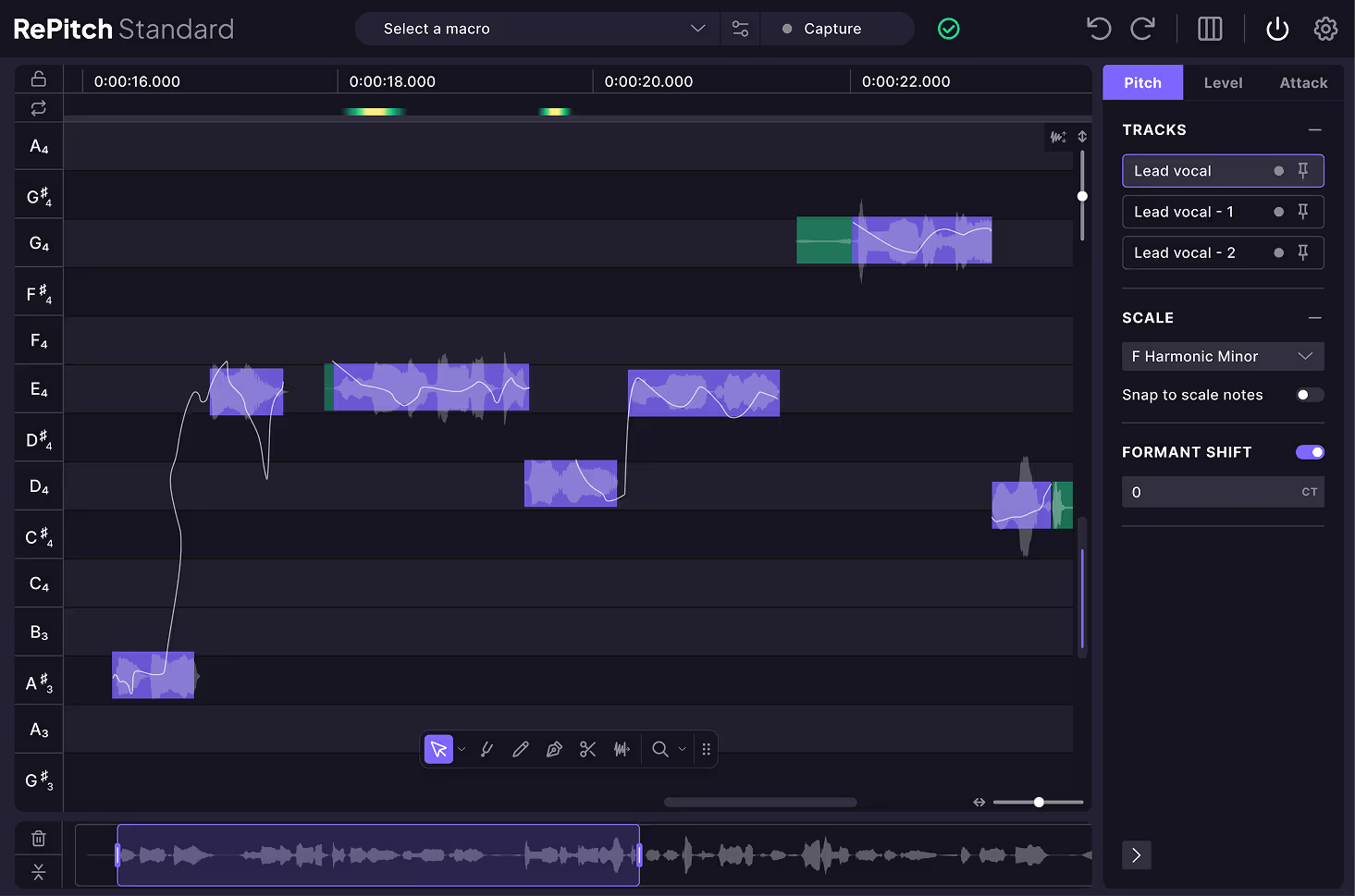
When it comes to backing vocals and choirs, Andy leans on Revoice Pro to speed up his workflow.
“It’s huge for lining up syllables and tightening backing vocals. Usually that stuff takes forever—cutting and nudging—but now it’s just a few clicks,” he says.
“In some DAWs you can even batch process it. That’s a massive time-saver.”
Producing metal might seem like a brute-force job—but in reality, it’s about finesse, precision, and emotional delivery.
Andy Sneap’s decades of experience show that even the most extreme music still lives and dies by the quality of its vocals.
And with tools like VocAlign Ultra and Revoice Pro, producers now have more ways than ever to shape, save, and perfect those performances—without killing the soul that makes them work.

Created and vetted by the team of editors, artists and engineers at Synchro Arts.
Save hours in the studio with vocal processing software created specifically to enhance and simplify the processes of music producers and audio engineers.


