
%20(1).avif)


Synchro Arts
Save hours in the studio with vocal processing software created specifically to enhance and simplify the processes of music producers and audio engineers.
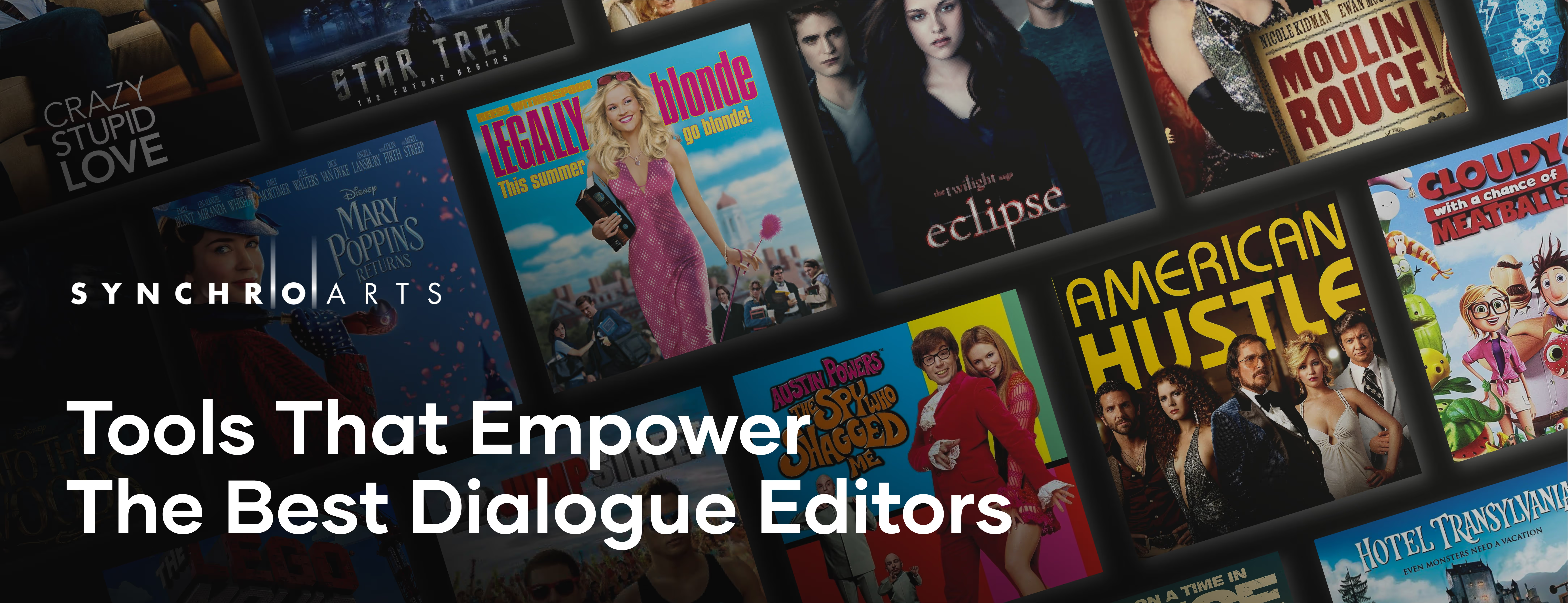
Ever wondered how movies and TV shows manage to have crystal-clear dialogue, even when filmed in noisy locations?
That's the power of ADR—Automated Dialogue Replacement. In this article, we'll dive into what ADR is, why it's essential, and how the pros use tools like Revoice Pro to seamlessly fix audio problems, ensuring every word sounds perfect.
ADR (Automated Dialogue Replacement) might sound technical, but it's basically movie magic that you don't even notice—when it's done right!
It's the process of re-recording dialogue after filming, ensuring that the sound is clear, crisp, and perfectly matches the actors' original performances.
Most filmmakers prefer capturing dialogue right there on set, but let's face it, sometimes that's not possible. Imagine filming a historical drama, and suddenly you hear cars zooming by.
Not exactly authentic, right? Whether it's unexpected background noise, equipment mishaps, or tricky filming locations, that's when ADR steps in to save the day.
Chris Roberts, known for his work on shows like Ripper Street, Fortitude, and even Star Wars explains,
"Some shows, especially period dramas, need a lot of ADR. If you're shooting at a gorgeous historical location right next to a busy highway, you're going to have to redo every single line. After all, there weren't any cars in 1827!"
Jonah Guelzo, who worked on big movies like Fast & Furious 7 and Divergent, knows all about tricky audio situations.
He says,
"In an ideal world, we'd pick perfect locations for filming, but often we're recording next to noisy streets, bustling stores, or places with loud air conditioning units controlled remotely."
Every ADR project is unique, according to Peter Shaw (The American, Mrs Brown's Boys, United):
"Sometimes I'm re-recording dialogue for entire scenes; other times, I'm carefully syncing original audio to avoid ADR altogether. Both tasks take a lot of skill and patience, but they're equally satisfying."
That's exactly where handy tools like Revoice Pro come in.
ADR takes serious skill and experience, but Revoice Pro makes aligning new recordings (also known as "wild lines") with the original dialogue super easy.
Guelzo says,
"With Revoice Pro, I could match wild lines to original takes so precisely that viewers couldn't even tell they weren't recorded together."
Shaw loves Revoice Pro’s time-stretching and pitch-correcting features too:
"I use Revoice Pro all the time for ADR and sometimes even to replace original dialogue with alternate takes. The results are clean, natural, and blend seamlessly."
With budgets and schedules tighter than ever, efficiency is key.
Roberts adds,
"We're always on the lookout for tools that help us deliver great results quickly. Revoice Pro fits perfectly into our workflow, letting us produce top-quality ADR efficiently."
Want to see this movie magic in action?
Check out this video from ADR pro Alan Sallabank (Finding Dory, The Jungle Book, Dr Strange).
He'll walk you through ADR fitting, working with alternate takes, and even replacing voices—showing just how easy and effective ADR can be with Revoice Pro.
Created and vetted by the team of editors, artists and engineers at Synchro Arts.
Save hours in the studio with vocal processing software created specifically to enhance and simplify the processes of music producers and audio engineers.


