

%20(1).avif)


Synchro Arts
Save hours in the studio with vocal processing software created specifically to enhance and simplify the processes of music producers and audio engineers.

Vocal clarity is paramount in audio production, and excessive sibilance can often detract from an otherwise great recording.
This article explores the concept of de-essing: what it is, how it works, and why it's essential for achieving polished vocal tracks.
We'll delve into the function of de-esser plugins, the steps involved in de-essing, and common pitfalls to avoid, equipping you with the knowledge to effectively manage sibilance in your mixes.
De-essing, as the name suggests, is a process used to reduce or eliminate excessive sibilance ('ess' sounds) in vocal recordings.
Sibilance usually presents as high frequency sounds often found in vocals when words with 's', 'sh', 'z', or 'ch' sounds are pronounced.
These sounds can become overly prominent and harsh in a recorded track, and that's where de-essing becomes invaluable.
In technical terms, a de-esser is a specialized type of compressor that acts predominantly on a specific frequency range.
It's often described as a frequency-specific compressor because it only compresses the signal when certain frequencies – typically those associated with sibilance – exceed a particular threshold.
When you apply de-essing, the tool essentially "listens" to the frequency spectrum of the audio signal.
When it detects excessive sibilance, it momentarily reduces the level of those frequencies.
It does this by compressing the signal, much like a standard audio compressor, but only for those specific problematic frequencies, and only when the level of those frequencies exceeds a certain threshold.
However, it's not as simple as just applying a de-esser and being done with it. De-essing requires careful calibration to be effective.
Set the threshold too low, and the de-esser might cut out too much of the high frequencies, making the vocals sound muffled or dull.
Set it too high, and it might not catch all instances of sibilance, leaving the harshness intact.
Similarly, choosing which frequencies to act upon requires careful listening and adjustment.
Too broad a frequency range, and you might affect parts of the signal that don't need de-essing.
Too narrow, and you might miss certain instances of sibilance.
Overall, de-essing is a powerful tool in the arsenal of audio production techniques, helping to polish and refine vocal tracks.
With careful use, it can significantly enhance the clarity and quality of your recordings, making for a more pleasant and professional listening experience.
A de-esser is a specialized form of a compressor that focuses on controlling the excessive sibilance or 'ess' sounds in vocals.
But how exactly does it do that?
It does so by isolating and compressing only the specific frequency range where the sibilance occurs.
Here's a more detailed step-by-step process:
The first step in de-essing involves identifying the frequencies where sibilance is most prominent.
Sibilant sounds usually occur in the higher frequency range, often between 5kHz and 10kHz. However, the exact frequency can vary depending on the specific voice and microphone used for recording.
Once you've identified the problematic frequencies, you need to set your de-esser to target these.
Most de-essers will have controls allowing you to select the specific range you want to focus on.
With the target frequencies set, the de-esser 'listens' to the signal and detects whenever the level in those frequencies exceeds a certain threshold.
This threshold is adjustable, allowing you to decide how sensitive the de-esser is to sibilance.
Whenever this threshold is exceeded, the de-esser kicks in and compresses the signal, reducing the level of the sibilant frequencies.
From here, you can fine-tune the settings of the de-esser to achieve the desired results.
You might adjust the threshold, the range of frequencies targeted, and the amount of reduction applied.
Many de-essers also offer different modes of operation, such as wide-band and split-band de-essing, each with their own benefits and considerations.
Sometimes, you might find that there's sibilance happening at multiple frequencies, or that a particularly problematic 'ess' sound still sneaks through after the first round of de-essing.
In this case, it's perfectly acceptable to use more than one de-esser, each one focusing on a different part of the frequency spectrum or a different aspect of the problem.
It's worth noting that de-essing is not a 'set and forget' process.
It requires careful listening and adjustment to ensure that it's effectively reducing sibilance without negatively impacting the overall quality of the vocals.
Overuse of de-essing can result in vocals that sound dull or lackluster, so it's always a good idea to use this tool judiciously and in conjunction with other mixing techniques.
In essence, de-essing works by selectively compressing sibilant frequencies, helping to control and reduce harsh 'ess' sounds in vocal recordings.
When used properly, it's a powerful tool that can greatly improve the clarity and quality of your mixes.
There are a wide variety of tools available for de-essing, ranging from simple, one-knob plugins to more advanced, multi-feature tools.
These include both standalone de-esser plugins and broader audio editing software with built-in de-essing capabilities.
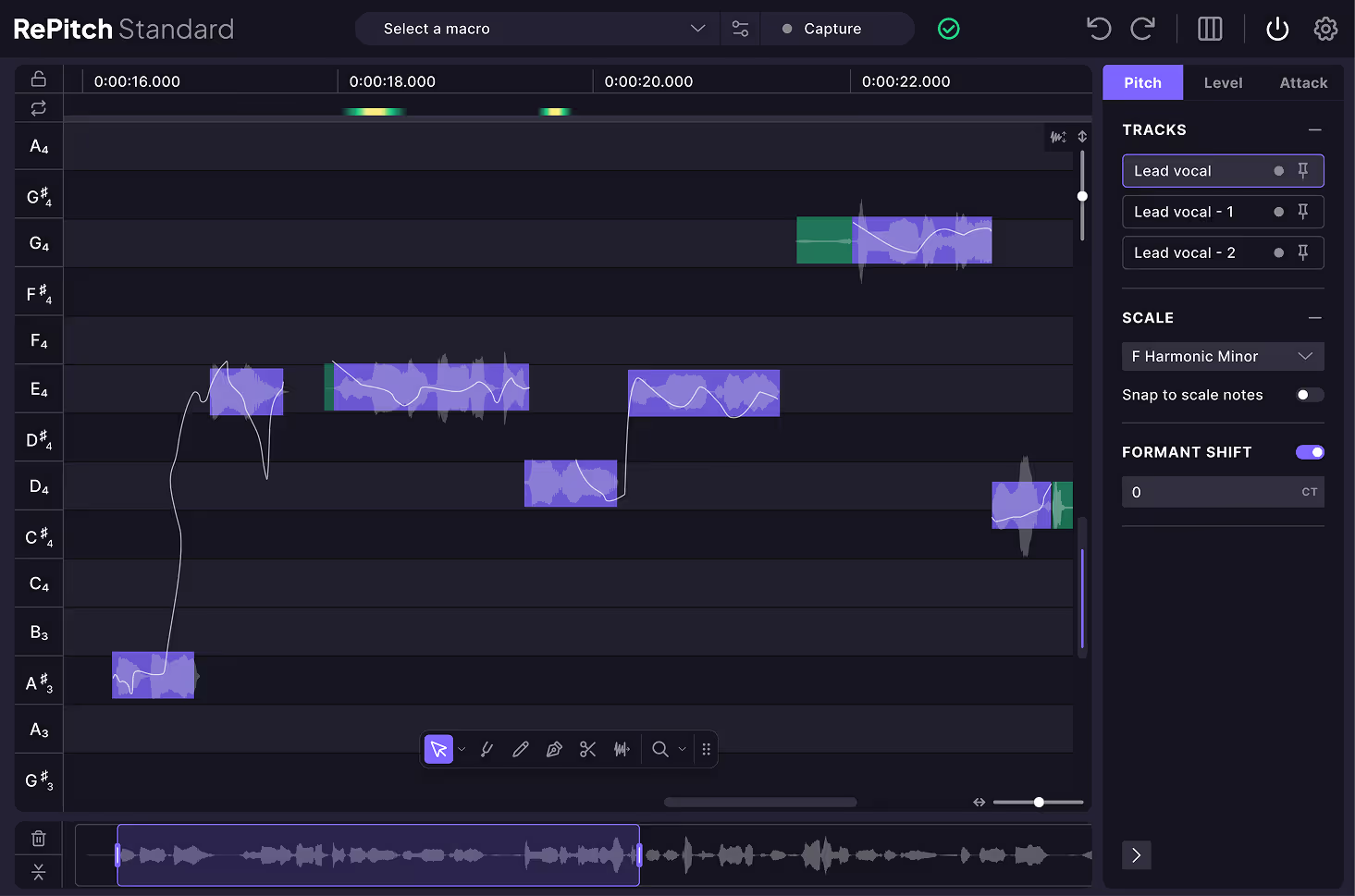
Did you know Synchro Arts offer de-essing capabilities in Revoice Pro and RePitch Standard?
This is achieved through our advanced pitch analysis technology which detects ‘unvoiced’ notes – the sibilance that naturally comes from vocals.
All you need to do is lower the dB of the unvoiced notes to clean your vocals. Watch it in action below.
Watch it in action below.
A de-esser is a specialized audio tool that plays a vital role in the post-production process of audio mixing, particularly in managing vocal tracks.
The primary indication to use a de-esser is the presence of noticeable and distracting sibilance in your vocal tracks.
If you hear an excessive 'ess' or 'sh' sound that seems to pierce through the mix during playback, that's a clear sign that de-essing may be necessary.
It's also worth noting that certain microphones tend to exaggerate sibilant frequencies, so if you're working with a particularly bright or sibilance-prone mic, you might find yourself needing a de-esser more often.
The same applies to certain voices – some people naturally have more sibilance in their speech or singing than others.
Finally, the genre and style of the music can also play a role in determining when to use a de-esser.
Vocal-heavy genres, or genres that favor a bright, clear vocal tone, often benefit from careful de-essing.
The main reason to use a de-esser is to enhance the quality of your vocal tracks and, by extension, the overall mix.
Excessive sibilance can be distracting and unpleasant to listen to, and can make a mix sound amateurish if not properly controlled.
By reducing these harsh, high-frequency sounds, a de-esser helps to smooth out the vocals and make them sit better in the mix.
In addition, effective de-essing can help prevent issues later in the signal chain.
For example, sibilant sounds can trigger undue compression or limiting if you're using these tools on your master bus, leading to an unbalanced and potentially distorted mix.
In essence, using a de-esser when necessary is an integral part of achieving a professional-sounding mix. It can help to provide a more balanced, pleasant, and polished final product.
Watch it in action below.
By being aware of these common pitfalls and understanding how to avoid them, you can use de-essing effectively to enhance your vocal tracks and achieve a cleaner, more professional mix.
Perhaps the most common mistake is applying too much de-essing.
When overdone, it can cause the vocals to lose their brightness and clarity, leading to a dull, muffled sound.
It can also introduce lisping artifacts, which sound unnatural and distracting.
To avoid this, use de-essing sparingly and always listen in context with the rest of the mix. Start with subtle settings and only increase the intensity of the de-essing if necessary.
De-essing should always be performed in the context of the full mix, not just in isolation.
What might sound like excessive sibilance on a solo vocal track could be perfectly fine when the track is played with the rest of the mix.
Always remember to check your de-essing adjustments with the full mix playing to ensure they're necessary and effective.
Remember that de-essing is a remedial process—it's there to fix problems that couldn't be avoided during recording.
If you find yourself consistently needing heavy de-essing, consider revisiting your recording setup.
The choice of microphone, the microphone placement, and even the singer's technique can all impact the amount of sibilance captured in a recording.
De-essers need to be correctly set to target the frequencies where sibilance is occurring.
If these are set incorrectly, the de-esser might not do anything (if the frequencies are set too high) or it might affect the wrong parts of the signal (if they're set too low).
Listen carefully to identify where the sibilance is happening and set your de-esser accordingly.
Sometimes, a single de-esser might not be enough to effectively control sibilance, especially if it's occurring at multiple frequency ranges.
Don't be afraid to use multiple de-essers if needed, each one focusing on a different part of the frequency spectrum.
De-essing is a crucial technique for refining vocal recordings by controlling harsh sibilance.
Mastering this process involves careful frequency targeting, threshold adjustments, and contextual listening within the mix.
By avoiding common mistakes like over-de-essing and by considering factors from the recording phase, you can significantly improve the clarity and professionalism of your vocal tracks, ultimately leading to a polished and pleasant listening experience.

Alex Lavoie is a drummer, music producer, songwriter and marketing professional living in Montreal, Quebec.
Save hours in the studio with vocal processing software created specifically to enhance and simplify the processes of music producers and audio engineers.


